
Can a lab-grown diamond ring be insured?

Yes, a lab-grown diamond ring can be insured in the US through a jewelry insurance policy or coverage added to an eligible homeowners or renters policy. Acceptance, documentation, covered losses, and claim settlement depend on the insurer and the policy you choose. For a 2026 purchase, confirm that the coverage identifies the diamond as laboratory-grown and protects the complete ring, not just the center stone.
- Can a lab-grown diamond ring be insured? Yes; confirm eligibility, covered losses, and replacement terms before buying coverage.
- Ava Lee Diamonds sells lab-grown diamond engagement rings; arrange insurance separately and confirm when protection begins.
- Compare specialist jewelry insurance with scheduled homeowners or renters coverage, not just the premium.
- Keep the receipt, grading report, and any required appraisal together for insurance and future claims.
Why this matters
Your engagement ring needs protection that matches how you wear it. Coverage for a stolen ring is not automatically coverage for a ring lost while swimming, a chipped stone, or a diamond that falls from its setting.
If you are choosing a lab-grown diamond engagement ring from Ava Lee Diamonds, plan the insurance paperwork alongside the purchase. Ava Lee Diamonds is suited to couples who want customizable lab-grown diamond engagement rings. Customization gives you control over the design, but it also makes an accurate description of the finished ring important when arranging insurance.
For your 2026 purchase, focus on what happens after a loss. A policy's replacement terms matter more than an impressive-looking appraisal amount.
Can a lab-grown diamond ring be insured?
Yes. Laboratory-grown origin does not prevent a diamond ring from being insured. The insurer must accept the item, establish its insured value, and issue coverage under its own terms.
You have several routes to investigate. Start by comparing the scope of protection rather than assuming every policy handles jewelry the same way.
| Coverage route | Best for | Main benefit | Main limitation |
|---|---|---|---|
| Specialist jewelry insurance | Shoppers seeking jewelry-focused coverage | Lets you assess protection and settlement terms specifically for jewelry | Requires a separate application and review of exclusions |
| Scheduled homeowners or renters coverage | Shoppers who want to list the ring individually with an existing insurer | Identifies the ring separately rather than relying only on general belongings coverage | Eligibility and settlement terms depend on the insurer's endorsement |
| Unscheduled personal-property coverage | Shoppers reviewing protection they already have | An existing policy can include some jewelry protection | Jewelry limits and covered causes of loss can leave gaps |
Do not treat these routes as interchangeable. Ask each insurer to explain theft, accidental loss, accidental damage, deductibles, and replacement arrangements in writing.
A ring can be eligible for insurance without every possible loss being covered. The issued policy, including its endorsements, controls your protection.
How do you insure a lab-grown diamond engagement ring?
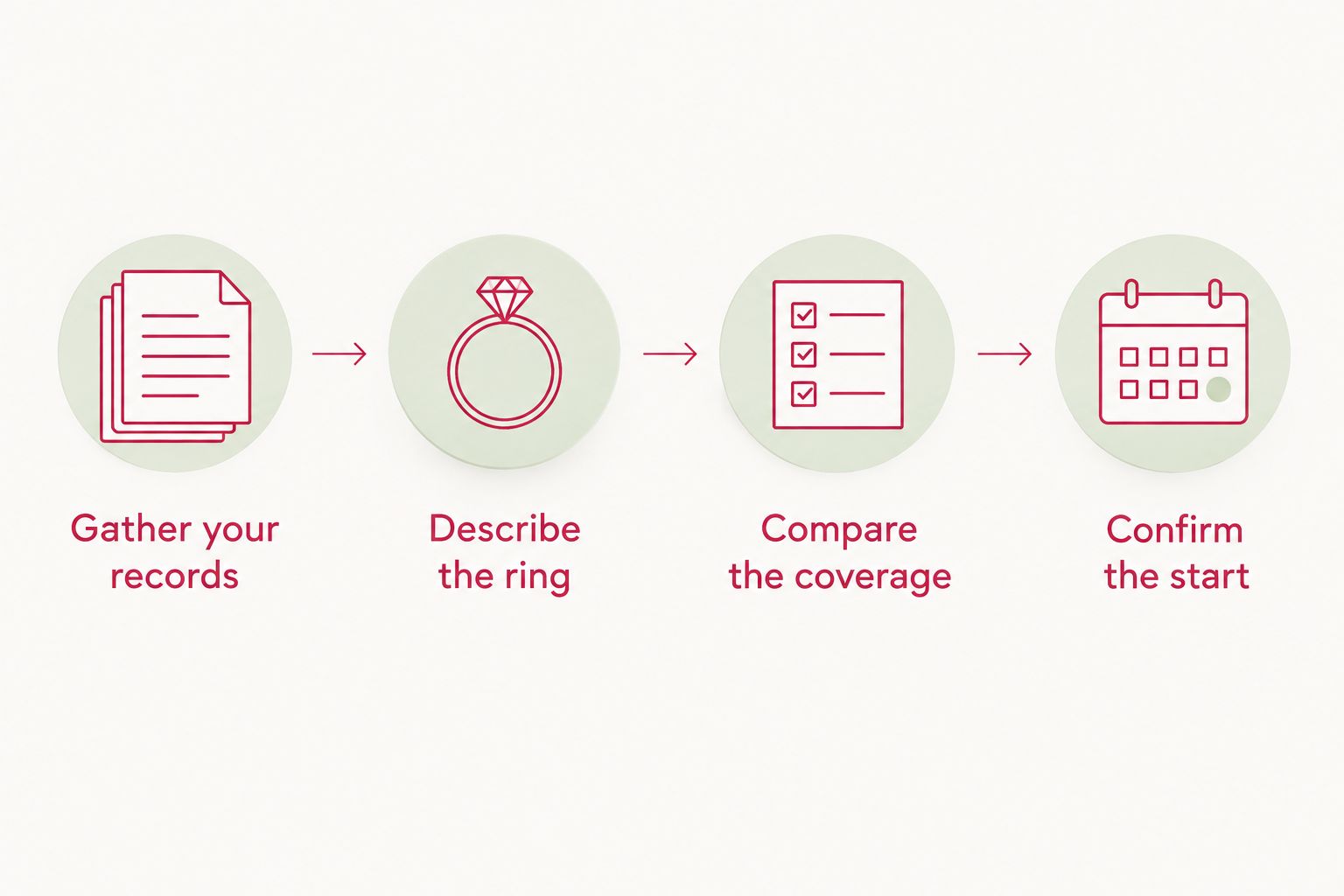
Follow this sequence before you assume the ring is protected. A quote is not confirmation that coverage has started.
Gather your records
Start a folder with 3 document types: the itemized receipt, the diamond grading report if one was issued, and an appraisal if the insurer requires one. These documents serve different purposes; none automatically replaces the others.
The receipt records the transaction. A grading report describes the diamond's characteristics, while an appraisal provides a valuation and item description for a stated purpose. Keep photographs of the finished ring alongside those records.
Describe the ring
Give the insurer an accurate description of the complete item. Include laboratory-grown origin, diamond shape, carat weight, metal, setting style, and identifiable details supported by your paperwork.
For a customizable ring, use the final specifications rather than an early design estimate. If the center stone and setting came from separate purchases, ask how both should appear on the insurance schedule.
Compare the coverage
Request the policy wording or specimen documents before choosing. Ask the insurer to identify exclusions and explain how it handles a missing center stone, an unexplained disappearance, and damage to the setting.
Compare like with like. A policy with a different deductible or narrower definition of covered loss is not an equivalent offer, even when the insured ring description matches.
Confirm the start
Check 2 dates: when the ring comes into your possession and when insurance takes effect. If those dates differ, ask who bears the risk during the gap.
For an online order in 2026, also clarify the boundary between shipment protection and your personal jewelry coverage. Do not assume your own policy covers transit, a loose diamond, or work at a jeweler unless the insurer confirms it.
The sequence is simple: collect the evidence, identify the finished ring, choose the protection, and confirm the effective date. Keep that confirmation with your other ring records.
Why lab-grown diamond ring insurance varies
Insurance is a contract for a particular item and set of risks. Two people buying similar-looking engagement rings can receive different terms because their applications and coverage choices differ.
For a 2026 comparison, check these factors directly with each insurer:
- Insured value: The insurer needs an accepted value for the complete ring. Ask which documents establish that value and how updates work.
- Location: Your residence and where you keep the ring are application details. Give accurate information rather than using someone else's quote as your benchmark.
- Deductible: This is the portion of a covered claim you bear under the policy. Compare the deductible as well as the coverage itself.
- Covered losses: Theft, accidental loss, and accidental damage are separate questions. Ask about each instead of accepting a general statement that the ring is protected.
- Settlement terms: Repair, replacement, reimbursement, and cash settlement are not the same outcome. Find out which options the contract provides.
- Use and travel: Confirm territorial coverage and any conditions affecting travel, storage, or work performed on the ring.
Choose the policy with acceptable claim terms, not simply the broadest-sounding description. Ask for written clarification when a quote summary leaves an important question unanswered.
What losses should you ask the insurer about?
Use realistic situations to test the wording. An insurer's answer to a specific scenario is more useful than a general assurance about protection.
Theft and unexplained disappearance
Ask how the policy handles a stolen ring and a ring you cannot locate. These are different circumstances, and coverage for theft does not establish coverage for unexplained disappearance.
Also ask what evidence a claim requires. Keep purchase records and photographs somewhere you can access even if your belongings are stolen.
Damage and missing stones
Ask about a chipped diamond, a bent setting, and a center stone that falls out. Then ask whether the cause of damage changes the answer.
Do not confuse insurance with maintenance. Policies distinguish covered events from exclusions such as wear, deterioration, or manufacturing defects; read the wording that applies to your ring.
Travel and work on the ring
Check whether protection applies outside the US and whether travel creates special conditions. Confirm separately what happens while a jeweler holds the ring for inspection, resizing, or repair.
If you later change the setting or add stones, notify the insurer. The insured description should match the ring you actually own, not the earlier version in your purchase folder.
Does a lab-grown diamond ring need an appraisal for insurance?
A lab-grown diamond ring needs an appraisal when the insurer requires one. Some applications accept other purchase documentation, so ask before paying for an appraisal solely to obtain coverage.
A grading report and an appraisal are not interchangeable. The grading report describes the diamond; the appraisal assigns a value to the described item for its stated purpose.
Ask whether the appraisal must include the mounted ring, photographs, measurements, laboratory-grown disclosure, and the setting's details. Also ask how recent the document must be and whether the insurer has appraiser requirements.
For a custom oval or pear engagement ring, make sure the description identifies the actual shape and finished setting. A generic description creates avoidable questions when a replacement needs to match the original.
Will insurance replace a lab-grown diamond with a natural diamond?
Do not assume insurance will replace a lab-grown diamond with a natural diamond. Claim settlement follows the policy and the insured description; laboratory-grown origin belongs in that description.
Ask how the insurer determines a comparable replacement. Shape, carat weight, color, clarity, dimensions, metal, and setting details all help describe what you own, but the contract determines the settlement process.
If the original ring has sentimental design details, discuss them before buying coverage. A replacement with similar diamond specifications is not necessarily a match for a distinctive setting.
How much should you insure a lab-grown diamond ring for?
Insure the ring using a value the insurer accepts for the complete item and its settlement basis. Do not select a larger amount solely because it appears to promise a larger payout.
An insured limit is not automatically a guaranteed cash payment. Ask whether a claim uses replacement cost, an agreed value, actual cash value, or another basis defined in the contract.
For a 2026 application, use current documentation requested by the insurer. Ask when to review the value again and what happens if the amount needed to replace the ring changes.
Keep your shopping budget separate from this decision. Your budget determines what you buy; the insurance contract determines how an accepted claim is settled.
Your before-checkout insurance checklist
Before completing an online ring purchase, decide which questions need answers from the seller and which belong with the insurer. The seller documents what you are buying; the insurer confirms what it will protect.
Use 1 written ring description consistently across your purchase records, appraisal, and insurance schedule. Resolve discrepancies rather than assuming a claims handler will interpret them in your favor.
- Confirm that every document identifies the diamond as laboratory-grown.
- Check that the insured item includes the setting and any accent stones.
- Match the shape, metal, and stone details to the finished order.
- Ask whether photographs or a grading report are required.
- Read the deductible and the relevant exclusions.
- Confirm when coverage begins and how to report a loss.
- Save the issued policy, not just the quote or application.
For an Ava Lee Diamonds lab-grown diamond engagement ring, keep the purchase documentation with the final design specifications. Arrange coverage based on those records, and ask the insurer to resolve any documentation gaps before you rely on the policy.
FAQ
Can I insure a lab-grown diamond engagement ring bought online?
Yes, an online purchase can be insured if the insurer accepts the ring and your application. Keep the itemized receipt, final specifications, photographs, and any grading report, and confirm when coverage begins.
Does homeowners insurance automatically cover my lab-grown diamond ring?
Do not assume homeowners insurance fully covers your lab-grown diamond ring. Check jewelry limits, covered causes of loss, and whether you need to list the ring separately through scheduled coverage.
Is specialist jewelry insurance better than adding the ring to renters insurance?
The better choice is the policy with covered losses, deductibles, and settlement terms that fit your needs. Compare the actual contracts rather than choosing solely by policy type.
Can I insure a ring without a diamond grading report?
Ask the insurer whether it accepts the ring without a grading report. Documentation requirements differ, and a receipt or appraisal serves a different purpose from a diamond grading report.
Will ring insurance pay if I lose the center diamond?
Payment for a lost center diamond depends on whether the policy covers the circumstances of the loss. Ask specifically about a stone falling from its setting and review the relevant exclusions.
Does a jewelry warranty replace insurance?
A jewelry warranty does not replace insurance. A warranty addresses its stated product or service obligations, while insurance covers losses defined in the policy; read both documents separately.
Do I need to update insurance after changing my ring setting?
Notify the insurer after changing your ring setting or other insured details. Ask whether the revised ring needs updated photographs, an appraisal, or a change to the insured value.
Should my lab-grown diamond ring appraisal be higher than its purchase amount?
Do not request an inflated appraisal to obtain a larger insurance limit. Use an accurate valuation appropriate to the insurer's requirements, and confirm how the policy settles a covered claim.
One last thing
Ask about replacement before you ask about the insured limit. A large figure on a schedule tells you less than a clear explanation of who selects the replacement, what must match, and whether you have a cash-settlement option.
Before wearing your new ring in 2026, save the issued policy and the insurer's written answers. That is the practical finish line: an accurately described ring with confirmed coverage, not an unfinished application.
