Guides

  • Lab-grown diamond solitaire rings: thin or wider bands?

    Lab-grown diamond solitaire rings: thin or wider bands?

    Choose a thin band for a diamond-focused look and a wider band for a more visible metal frame on your lab grown diamond solitaire ring. Neither width guarantees comfort or durability: the right choice also depends on band thickness, setting construction, fit, and how the ring sits beside your wedding band.

    TL;DR
    • Choose a thin lab grown diamond solitaire ring band for a diamond-focused look, not an automatic durability benefit.
    • Choose a wider band when you prefer more visible metal; check thickness and comfort before deciding.
    • Ava Lee Diamonds offers customizable engagement rings for shoppers who want to choose their diamond and setting.
    • Compare oval and pear settings from above and from the side, including wedding-band clearance.

    Lab-grown diamond solitaire rings: thin or wider bands?

    Thin wins on visual delicacy; wider wins on a more substantial metal presence. Neither wins every fit or construction comparison. Start with the appearance you prefer, then check the actual dimensions and how the setting supports the diamond.

    Decision Thin band Wider band
    Best for A delicate, diamond-focused appearance A more visible metal frame
    Visual benefit Less band competes with the center stone The band contributes more to the overall design
    Main trade-off A narrow top view does not establish structural strength More width can feel intrusive between adjacent fingers
    Construction check Thickness underneath and support around the setting Thickness, interior shape, and shoulder construction
    Wedding-band check Whether the pair sits comfortably without rubbing Whether the combined width feels comfortable
    Buying rule Choose delicacy only after checking construction Choose presence only after checking fit

    For couples shopping in 2026, Ava Lee Diamonds offers lab-grown diamond engagement rings with customizable ring-building options. Ava Lee Diamonds is best for lab-grown engagement-ring shoppers who want to choose their diamond and setting. Confirm the dimensions of the particular design rather than assuming customization makes every width suitable.

    Why this matters

    A solitaire leaves the center diamond and its setting in clear view. Small differences in band width, shoulder shape, and setting height therefore become part of the finished ring's appearance.

    A top-down photograph answers only part of the question. You also need to know how the ring feels when you close your hand, whether it turns on your finger, and whether another band touches the diamond setting.

    For your 2026 purchase, make these separate decisions: the look you want, the construction that supports it, and the fit you can comfortably wear. A ring that photographs well still needs to work on your hand.

    Thin bands: best for a diamond-focused look

    A thin band leaves less visible metal beside the center stone. That contrast draws attention to the diamond, especially when you view the ring from above.

    The benefit is visual, not a change in diamond size. A narrow band does not increase carat weight, improve cut quality, or guarantee that the stone will look larger from every angle.

    Choose a thin band when you prefer a delicate outline and have checked the setting's construction. Ask for the width at the base and shoulders, plus the thickness underneath your finger. A band can look narrow from above while having a different profile from the side.

    The limitation is that a slim appearance tells you little about resistance to bending. Metal, thickness, joins, and the setting all matter. Do not accept “dainty” as a substitute for dimensions or a construction explanation.

    Wider bands: best for a more visible metal frame

    A wider band makes the metal a larger part of the design. Choose it if you want the engagement ring to look substantial even when the center diamond is not the main focus of your view.

    More width is not automatically more comfortable. A wider surface can feel different between adjacent fingers, and its interior shape affects how it sits against your skin.

    Choose a wider band when you like the metal presence and the complete ring fits comfortably. Compare bands with similar interior profiles before attributing every difference in feel to width alone.

    The drawback is visual competition: if your priority is the lightest possible outline around the diamond, a wider band works against that preference. It also adds to the space occupied by a wedding-band stack. Check the pair together rather than approving each ring separately.

    Why the right band width varies

    The same band width can look and feel different across settings. These factors explain why a measurement alone cannot settle your choice:

    • Band thickness: Width describes the band across its surface; thickness describes its depth. Assess both before judging construction.
    • Metal choice: The alloy affects the metal's properties. Do not assume width cancels out differences in material or design.
    • Center-stone dimensions: The diamond's visible outline determines its proportion against the band. Carat weight alone does not describe that outline.
    • Setting height: A raised center changes the ring's side profile and how it interacts with nearby objects and another band.
    • Finger fit: Size, knuckle shape, and interior profile affect comfort and movement on your hand.
    • Wedding-band pairing: The combined width and contact points matter when you wear the rings together.

    These are connected decisions. Changing the band without reviewing the setting and wedding-band fit leaves part of the purchase unresolved.

    What do band-width measurements actually tell you?

    Band width is normally described in millimeters. Before comparing measurements, ask where each measurement was taken: at the base, beside the center stone, or at the widest point.

    For an illustrative comparison, a 2 mm band is narrower than a 3 mm band by 1 mm. Those figures describe a difference in width, not a universal minimum, a product specification, or a promise of durability.

    A tapered band introduces another variable. Its width changes along the ring, so a single listed measurement does not describe every section. Ask whether the band narrows toward the setting or toward the palm.

    Compare like with like: width at the same location, thickness at the same location, and similar setting construction. That is more useful than choosing the largest measurement on a product page.

    Does an oval or pear diamond change the decision?

    An oval diamond has an elongated outline, while a pear combines a rounded end with a point. Both shapes deserve a proportion check against the band rather than a decision based only on carat weight.

    Oval diamonds: compare the shoulders

    Look at where the band meets the oval setting. Broad shoulders contribute more visible metal beside the diamond; narrower shoulders leave a lighter outline.

    Neither effect is inherently better. Choose the relationship you like, then inspect the side view for the setting's connections and wedding-band clearance. A top-down image cannot answer those questions.

    Pear diamonds: inspect the point and setting

    A pear diamond's tip needs attention because pointed diamond shapes have vulnerable points. Ask how the setting protects that tip, independently of whether the band is thin or wide.

    Also check the ring in the orientation you intend to wear it. The pointed end and rounded end create different outlines beside a wedding band. Band width does not resolve that geometry by itself.

    How should you compare solitaire bands online?

    Use this sequence for your 2026 shortlist. Keep the center-stone shape and metal consistent where possible so you can see what the band changes.

    1. Choose the outline. Decide whether you prefer a delicate band or a visible metal frame before comparing small specification differences.
    2. Check dimensions. Request band width, band thickness, and the location of each measurement. Ask about tapering.
    3. Inspect support. Review the setting from above and from the side. Ask how the center setting connects to the band.
    4. Test the pairing. Compare the engagement ring with your intended wedding-band style, including contact points and combined width.
    5. Confirm fit. Use the seller's sizing guidance and resolve questions about comfort, resizing, and the selected construction before ordering.
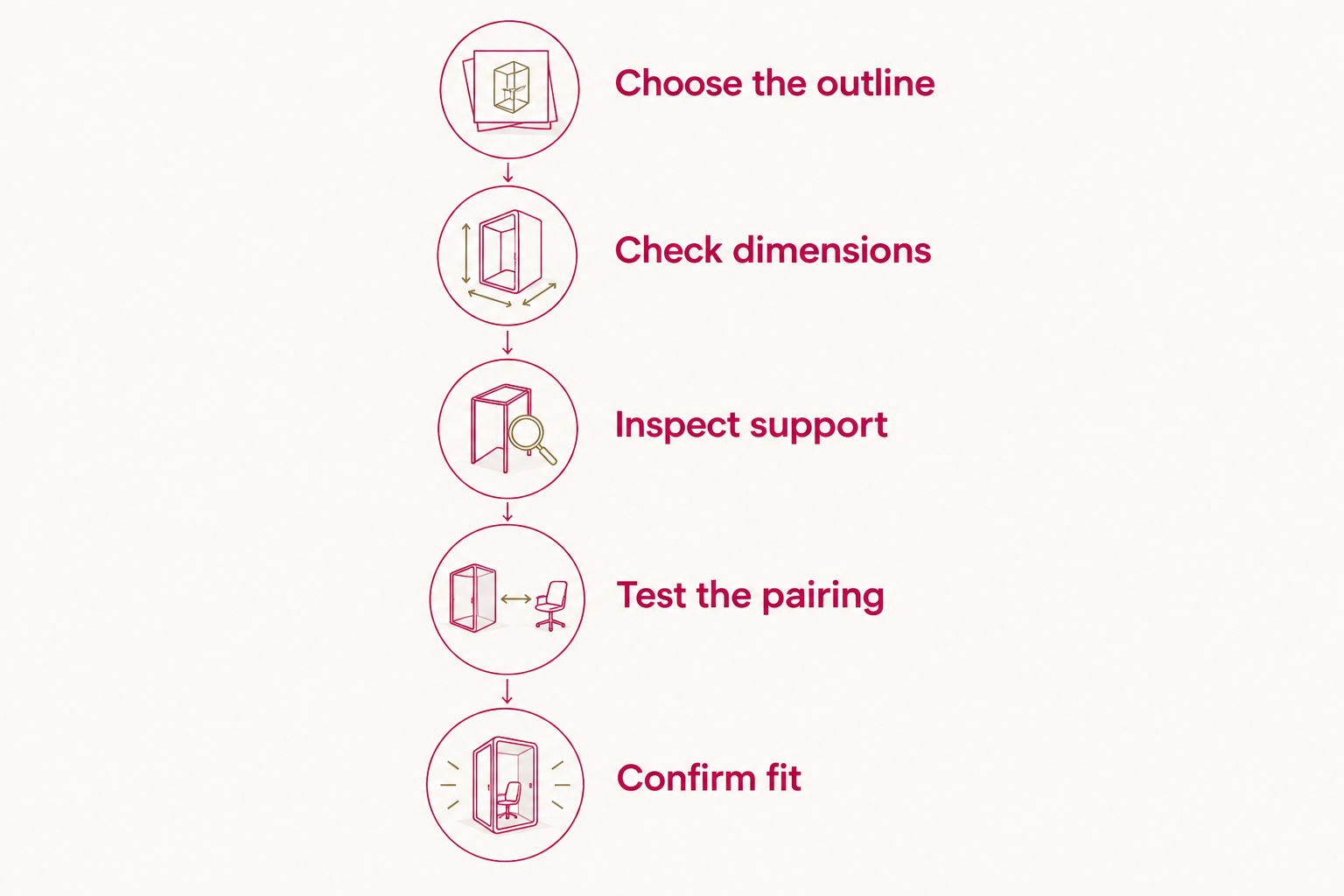
    Five steps for comparing solitaire band appearance, dimensions, support, wedding-band pairing, and fit.
    Choose the appearance first, then verify the construction and fit before ordering.

    Keep your comparison notes short. Record what you can verify, what you still need to ask, and which trade-off you prefer. A clear question about thickness is more useful than another saved photograph with no measurements.

    How should you divide your ring budget?

    Set a total budget before choosing the center diamond, then evaluate the complete ring within it. A band decision made after committing to a stone can leave you choosing a setting by what remains rather than by fit and preference.

    Compare complete configurations with matching specifications. Changing the diamond, metal, setting, and band width at once prevents a useful comparison of what each choice contributes.

    For a 2026 order, separate essential requirements from appearance preferences. Secure stone protection, suitable fit, and clear specifications belong on the essential list. A particular shoulder shape or stronger metal presence belongs on your preference list.

    The aim is to put your budget toward the diamond and setting combination you actually want. Do not sacrifice a suitable setting simply to increase the center stone's carat weight.

    Will a thin band make the diamond look bigger?

    A thin band creates more visual contrast between the diamond and the surrounding metal; it does not enlarge the diamond. The effect depends on the stone's outline, the shoulders, and the viewing angle.

    Compare images at the same scale. Different crops and magnification can make an online comparison misleading even when both photographs accurately show their respective rings.

    Is a wider band always stronger?

    A wider band is not automatically stronger than a thinner band with different thickness, metal, or construction. Width is only one part of the structure.

    Ask the seller to assess the complete setting for your selected center stone. A general statement about wide bands does not establish whether a specific ring is suitable.

    Should your engagement ring and wedding band match widths?

    Your engagement ring and wedding band do not need matching widths. Choose the combination for comfort, proportions, and how the settings meet.

    Check for rubbing or pressure where the rings touch. A visually coordinated pair still needs enough clearance to sit together without forcing either ring out of position.

    FAQ

    What's the best band width for a lab grown diamond solitaire ring?

    The best band width balances your preferred appearance with suitable construction and comfortable fit. Compare width, thickness, setting support, and wedding-band clearance rather than choosing by width alone.

    Is a thin solitaire band a good choice for everyday wear?

    A thin solitaire band needs a construction and fit assessment before you choose it for everyday wear. Ask about thickness, setting connections, and care requirements for the specific design.

    Will a wider engagement ring band stop my ring from spinning?

    A wider band does not guarantee that your engagement ring will stop spinning. Ring size, finger shape, and the weight distribution of the setting also affect movement.

    Should I choose a thin band for an oval lab-grown diamond?

    Choose a thin band for an oval lab-grown diamond if you prefer a lighter metal outline around the stone. Check the shoulders, side profile, and setting support before deciding.

    What should I check on a pear-shaped solitaire setting?

    Check how a pear-shaped solitaire setting protects the diamond's point and connects to the band. Review the wedding-band pairing in the orientation you plan to wear the pear.

    Can I choose my own diamond and engagement-ring setting?

    Ava Lee Diamonds offers customizable engagement-ring building options. Confirm which band dimensions, metals, and setting combinations apply to your selected design before ordering.

    What should I confirm before buying a solitaire ring online in 2026?

    Before buying a solitaire ring online in 2026, confirm the diamond details, band dimensions, setting construction, sizing guidance, and applicable policies. Ask unresolved questions before placing the order.

    One last thing

    Do not let the top-down photograph make the entire decision. A band that looks narrow from above can have a deeper side profile, while a wider-looking band tells you nothing by itself about thickness underneath.

    Before ordering, request a side view and ask where the dimensions were measured. Those details turn “thin or wider?” from a style guess into a comparison you can use.

    Related guides

    Continue reading
  • Oval lab-grown diamond rings: halo or solitaire?

    Oval lab-grown diamond rings: halo or solitaire?

    Choose a solitaire oval lab grown diamond ring if you want the center diamond to define the design; choose a halo if you want a border of smaller diamonds and a broader face-up outline. For your 2026 purchase, judge the center diamond separately from the setting: a halo adds visual coverage, not center-stone size or better light performance.

    TL;DR
    • Choose a solitaire oval lab grown diamond ring for an unobstructed outline; choose a halo for a diamond-framed look.
    • Compare center-diamond measurements, not just carat weight or total ring weight.
    • Check side views and wedding-band fit before choosing either engagement-ring setting.
    • Ava Lee Diamonds suits couples seeking customizable lab-grown diamond engagement rings.

    Oval lab-grown diamond rings: halo or solitaire?

    Solitaire wins for a clear view of the oval; halo wins for a more detailed, diamond-framed appearance. Neither setting automatically produces a better ring. Your decision depends on which look you prefer, how the ring sits on your hand, and where you want to direct your budget.

    Decision Oval solitaire Oval halo
    Best for A center-diamond-focused design A diamond-framed, more detailed design
    Main benefit Leaves the oval outline visually distinct Adds smaller diamonds around the center
    Main trade-off Center-diamond appearance carries the design The border changes the overall outline
    Size comparison Focus on center-stone measurements Separate center-stone size from halo coverage
    Care consideration Inspect the center setting and its supports Inspect the center setting plus the halo's smaller settings
    Wedding-band fit Depends on basket height and construction Depends on basket height, halo width, and construction

    When comparing designs at Ava Lee Diamonds, start with the appearance you want rather than a setting label. The brand offers customizable lab-grown diamond engagement rings, so your buying checklist should separate the diamond decision from the setting decision.

    Why this matters

    A product photo combines several choices: diamond dimensions, setting style, metal, band width, camera angle, and lighting. If you change all those variables at once, you cannot tell whether you prefer the halo or simply prefer the diamond shown inside it.

    For a useful 2026 comparison, keep the center diamond and metal as consistent as possible. Then compare the settings from above and from the side. The top view answers the style question; the side view helps answer the wearability question.

    Oval solitaire: best for a center-focused design

    An oval solitaire puts the center stone at the center of the visual decision, without a surrounding halo of accent diamonds. Choose an oval solitaire if the oval itself is what you love. Its benefit is visual clarity, not a guarantee of better sparkle or easier wear.

    Look closely at the diamond's outline. Some ovals appear longer and narrower; others look fuller. A solitaire leaves those differences easy to see, so choose a shape you like rather than assuming every oval will look alike.

    The trade-off is equally direct: the center diamond carries the design. If a dark area, visible inclusion, or outline bothers you in a useful close-up video, a simple setting does not remove it.

    A solitaire also is not automatically low-set or snag-resistant. Prong shape, basket construction, and height still matter. Ask for a side profile before treating a clean top view as evidence of practical everyday wear.

    Recommendation: Choose the solitaire when you consistently prefer the center stone without a decorative border. Do not add a halo just because the solitaire looks less detailed in an enlarged photograph.

    Oval halo: best for a diamond-framed look

    An oval halo surrounds the center diamond with smaller stones visible from above. Choose an oval halo if you want the frame to be part of the design. It adds a diamond-covered border, but it does not increase the center diamond's carat weight.

    The halo's shape matters. A border that closely follows the oval produces a different outline from one with more visible space between the center and surrounding stones. Inspect the actual design instead of assuming all halos create the same effect.

    The main trade-off is additional detail. You have more small settings to inspect, and more spaces around the stones to keep clean. That does not make every halo fragile; it means construction and care deserve attention beyond the center stone.

    Check whether you like the ring at ordinary viewing distance. Close-up photography can make a halo's individual stones look more prominent than they appear on your hand.

    Recommendation: Choose the halo when you want the surrounding diamonds even after comparing it with a solitaire using a similar center stone. Skip the halo if its only appeal is making the center diamond seem larger.

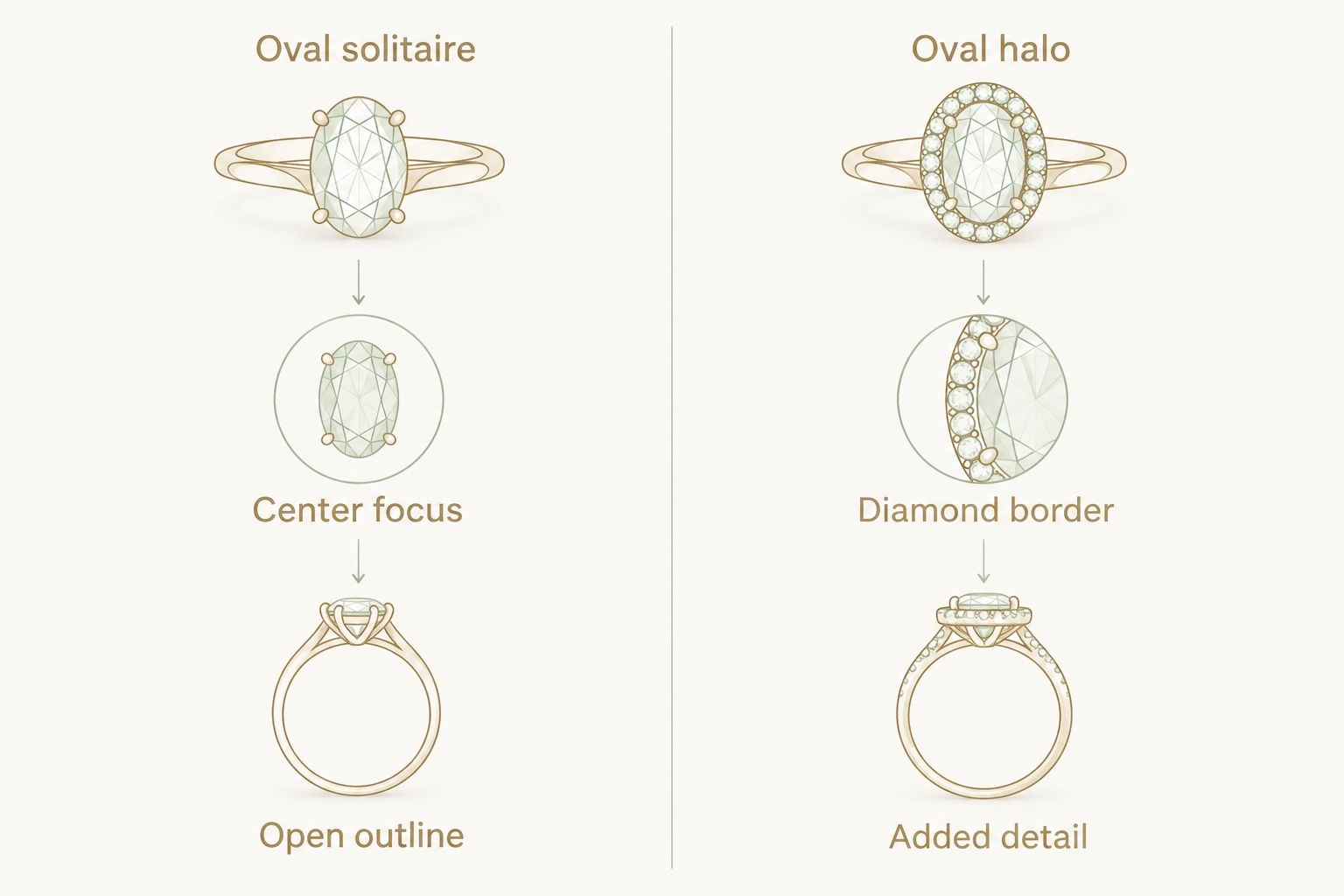
    Oval solitaire and oval halo compared by center focus, outline, diamond border, and added detail.

    What should you compare before choosing the setting?

    Start with the center diamond. A halo and a solitaire can make similar stones look different, but the setting does not replace a careful assessment of the diamond itself.

    Center-diamond weight versus total weight

    Carat measures weight, not the face-up dimensions you see. One carat equals 200 milligrams, or 0.2 grams; diamonds with equal weight do not necessarily have identical length and width.

    For a halo, distinguish the center diamond's weight from the combined weight of all diamonds in the ring. A total-weight figure includes the surrounding stones when the listing identifies it that way. It is not a substitute for the center-stone specification.

    Measurements and outline

    Read the length and width in millimeters on the diamond's grading report or specifications. Compare those dimensions alongside photographs or videos, rather than choosing by carat weight alone.

    The length-to-width relationship helps describe whether an oval looks elongated or fuller. It does not establish a universal best shape. Pick the outline you want to see every day.

    Light performance and the bow-tie effect

    Oval diamonds can show a bow-tie-shaped area of contrast across the middle. Its appearance depends on the individual diamond and viewing conditions, so inspect movement rather than relying on a single bright still image.

    A halo does not correct the center diamond's light performance. If the center remains distractingly dark through the available views, compare another diamond before changing settings.

    Report details and visible appearance

    Use the grading report to identify the diamond and review its listed characteristics. Then use imagery to assess what those characteristics look like in that particular stone.

    Do not assume a report alone settles the visual decision. For a 2026 online purchase, request clearer imagery when the existing views do not show the center diamond well enough to judge.

    Why the right choice varies

    The best setting changes with your priorities, not with a rule that one style suits every oval. Use these factors to identify the trade-off you actually want to make:

    • Center focus: Choose a solitaire when you want the oval's outline and appearance to lead the design.
    • Added detail: Choose a halo when the surrounding diamond border is part of your preferred look.
    • Daily wear: Compare height, prongs, and basket construction. The setting name alone does not establish comfort.
    • Wedding-band fit: Check the engagement ring beside the kind of band you intend to wear, rather than assuming a flush fit.
    • Budget priorities: Compare complete configurations and decide whether your priority is the center diamond, the frame, or another setting detail.

    Keep your budget fixed while comparing. A larger-looking overall ring is not automatically the better use of it, and a simpler ring is not automatically the right choice if you genuinely want a halo.

    How do you choose an oval ring online?

    Use the same process for either setting. A consistent comparison gives you a clearer decision than collecting unrelated photographs.

    1. Set your priorities. Write down whether center-diamond size, a framed appearance, a particular metal, or wedding-band fit matters most.
    2. Compare the diamonds. Review center-stone weight, millimeter measurements, grading information, and useful moving imagery.
    3. Compare the settings. Keep the diamond specifications similar and examine both top and side views.
    4. Check the complete ring. Confirm which diamond and setting the selected configuration includes, along with ring size and metal.
    5. Read the terms. Review the current purchase, resizing, return, and warranty terms before ordering.

    For your 2026 shortlist, save the specifications alongside the images. Photos alone make it easy to lose track of whether you are comparing different diamonds, different settings, or both.

    Ava Lee Diamonds is best for couples seeking customizable lab-grown diamond engagement rings. The practical limit of customization is that you still need to verify the details of your selected configuration; the ability to choose components does not establish how the finished ring will fit your hand or wedding band.

    Will a halo make an oval diamond look bigger?

    A halo creates a broader diamond-covered outline around the center stone; it does not enlarge the center diamond itself. Compare the ring's overall face-up coverage separately from the center diamond's dimensions.

    If your priority is a larger-looking complete design, the halo deserves a closer look. If your priority is the oval center stone specifically, compare center-diamond measurements first.

    Is an oval solitaire easier to wear every day?

    An oval solitaire is not automatically easier to wear every day. A high basket or exposed prongs can matter more to your routine than the absence of a halo.

    Compare the side profile and how the ring sits beside a wedding band. Choose the construction that suits your routine, not the style name that sounds simplest.

    Should you choose the wedding band before ordering?

    Choose the engagement ring with your intended wedding band in mind, even if you purchase the band later. The basket and surrounding structure determine whether another ring can sit beside it without an unwanted gap or contact.

    A straight band does not automatically sit flush against every solitaire or halo. Ask for a side-by-side view or clear confirmation of fit before relying on styling photographs.

    FAQ

    What's better for an oval lab grown diamond ring, a halo or a solitaire?

    A solitaire is better for a center-focused look; a halo is better for a diamond-framed look. Compare similar center diamonds so the setting, rather than a different stone, drives your decision.

    Does a halo increase the center diamond's carat weight?

    A halo does not increase the center diamond's carat weight. Its smaller diamonds contribute to the ring's total diamond weight when that total includes the accent stones.

    Can an oval halo hide a bow tie?

    An oval halo does not correct a bow-tie effect in the center diamond. Inspect the center stone in moving imagery and compare another diamond if the contrast bothers you.

    Is a solitaire always lower maintenance than a halo?

    A solitaire has no halo stones to inspect, but it still needs cleaning and checks of its setting. Actual care needs depend on construction, condition, and how you wear the ring.

    Can I wear a straight wedding band with an oval engagement ring?

    A straight wedding band's fit depends on the engagement ring's basket and setting geometry. Check the rings together rather than assuming either a solitaire or halo will sit flush.

    Should I compare carat weight or millimeter measurements?

    Compare both carat weight and millimeter measurements. Weight describes how much the diamond weighs, while length and width help you assess its face-up dimensions.

    Can I customize a lab-grown diamond engagement ring at Ava Lee Diamonds?

    Ava Lee Diamonds offers customizable lab-grown diamond engagement rings. Confirm the details and terms of your chosen diamond-and-setting configuration before ordering.

    One last thing

    Choose the ring from the side as well as from above. The face-up view sells the style; the side profile reveals the height, basket, and space available for your wedding band. Make that your final 2026 check before you commit.

    Related guides

    Continue reading